4Cs vs. 5Cs of Lab-Grown Diamonds
Lab-grown diamonds receive a Five C's report. They will show variations within the Five C's range, ranging from poor to superlative quality like mined diamonds. The key to picking out the right diamond for your ring is the Five C's.
What are the 4Cs of diamonds?
The Five C's are cut, color, clarity, carat weight, and certification. These are the important elements you really need to know about when buying a lab-grown diamond.
1. Cut
The cut is the most important of all the Five C's. The beauty and value of a diamond are achieved by the proper setting of an uncut diamond.
People usually think of the cut of a diamond as the shape (round, princess, emerald, pear, etc.). However, the cut is not the shape. The cut of a diamond is the precise process of faceting the stone with proportions, symmetry, and polish that allow the facets to dance with the light and release the diamond's maximum beauty.
When a diamond is properly cut, light travels through the pavilion and reflects off the top of the diamond (called a table by gemologists) to produce the desired Brilliance, Brightness, Fire, and Scintillation.

-
The gemological laboratories have five cut grades: Excellent, Very Good, Good, Fair, and Poor (the worst grade).
Excellent (EX): A flawless large diamond has high brilliance, scintillation, and an even pattern of light and dark areas.
Very Good (VG): Diamonds in this cut grade also have high brilliance and sparkle, but they are expected to be a bit dark in the center or at the edges.
Good (G): Generally speaking, stones in this grade will be a bit dark or lacking in scintillation. A stone can also be graded according to its shape or weight ratio.
Fair (F): This grade of stone will have very little brilliance or scintillation.
Poor (P): This type of stone has very poor proportions and shows very brilliance or scintillation.
-
Understanding how light interacts with a diamond is necessary for you to know the differences between an excellent cut diamond and a regular cut one. The light is reflected and refracted in a different way than in air, water, glass, or other gemstones.
-
Brilliance is the brightness that you see when you look at a diamond. A well-cut diamond has specific dimensions that reflect and return almost all the light entering the diamond from the top of the diamond. Even in poor light, the diamond will appear very bright. A poorly cut diamond will leak light from the bottom and become dull or flat compared to a well-cut diamond.
Fire describes the iridescent color reflected by a diamond gemstone. Diamonds have a very high light dispersion. When white light enters a diamond, it disperses into different colors like a prism. Scintillation defines the sparkle seen when a diamond moves. This is also known as the sparkle of a diamond.
The better the diamond is cut, the better the contrast between the dark and light areas. Ordinary diamonds have blurry gray areas, while the best cut diamonds have very distinct contrasting patterns consistent throughout the diamond.
2. Color
A perfect diamond, without impurities and defects, is completely colorless.
Lab-grown diamonds vary in color and are not all colorless. The colors of lab-made diamonds can vary in color from icy white to yellow brown. Gemological laboratories have standardized grades of D-Z. The price of lab-produced diamonds is influenced by the color grade, as diamonds with higher colors are preferred over those with warmer colors.
D: Absolutely colorless: The highest grade of color
E-F: Colorless: An expert gemologist can detect minute traces of color
G-J: Near colorless: Color difficult to detect by the naked eye, unless
compared side by side against diamonds of higher grade
K-M: Faint Color: Has a slight yellow hue
N-R: Noticeable color: Diamonds in this color range tend to have a yellow hue
S-Z: Very Noticeable Color: The diamond has an apparent yellow hue
How Do Diamonds Get Their Color?
The most common inclusions in diamonds are clusters of nitrogen atoms within the diamond that form yellow or brown undertones. Over 98% of mined diamonds contain nitrogen impurities. Laboratory diamonds' yellow and brown undertones come from cavities in the crystal structure created by CVD growth. Most HPHT diamonds are colorless and may have blue or gray undertones. Before purchasing, a lab diamond specialist must inspect your diamond to ensure it has no undesirable color.
3. Clarity
Clarity is a measure of how many flaws or inclusions are present in a diamond, which may be defects in the diamond's crystals. The lower the clarity of a diamond, the more blemishes are present in the diamond. Clarity is graded on a scale from Internally Flawless to Included. Not all lab-produced diamonds are perfect.
Lab-grown varieties vary in clarity. Not all inclusions are created equally. Some lab-grown diamond inclusions are difficult to detect even under magnification, while others are easier to see with the naked eye. Clarity is the second most important driver of price, after carat weight.
From flawless to included - 5 major grades of clarity
The grade contains a major grade and a sub-grade. The numbers following the major grade are a sub-grade, the lower the number, the better. For example, a VS1 is better than VS2, and VS2 is superior to an SI1.
-
When magnified, both FL and IF diamonds are free of visible internal inclusions. The Flawless and the Internally Flawless lab diamonds are extremely rare. This is because truly perfect lab diamonds are not cut into gemstones but are used for high-tech purposes such as laser lenses.
-
The grade given to a diamond with minute inclusions that range from extremely difficult to very difficult to see is visible to a skilled grader using 10x magnification.
-
Typically, you will need to use a gemological microscope to identify VVS2 inclusions. The inclusions pattern is usually not one larger spot but several individual VVS1 sized spots that together equal the VVS2 clarity grade. Since each spot is too small to be seen with a jeweler's loupe, a microscope is needed to identify them.
-
Unlike VVS2 clarity inclusions, a microscope is not needed to locate a VS1. VS1 clarity inclusion is relatively small and is not visible to the naked eye.
-
Imperfections are difficult to find by magnification and not visible to the naked eye. Even equipped with a 10x magnification, inclusions are difficult for the layman to find.
-
As with the previous poorer VS2 sample, the diamond SI1 clear inclusions are an extreme example of the maximum size and worst color of SI1. Clarity grades can be based on many different inclusions points within the diamond. It is less common for clarity grades to be based on one concentrated inclusion (especially for SI1 and below).
Often, many smaller spots and clouds are made up of tiny spots that make up the clarity grade. In these cases, the diamond appears clean to the naked eye because each inclusion is so small.
-
Like Emerald and Asscher cuts, SI2 clarity inclusions are most likely to be visible to the naked eye. However, for other brilliant shapes (basically all the other common shapes), SI2 clarity inclusions are usually clean to the naked eye.
-
I1 clarity inclusions are visible on step cuts (Asscher Cuts and Emerald Cuts). Most clarity grades consist of several to many smaller inclusions spread out in a diamond. In these cases, the I1 clarity inclusion will be much less noticeable to the naked eye.
4. Carat Weight
The carat weight is the measure of its weight. When a diamond is cut correctly, the carat weight determines the size of the diamond, and larger diamonds tend to be more expensive. One carat equals 0.2g and is subdivided into 100 points.
How Carat Weight Plays Into The Five C's And Diamond Value?
The carat weight is the most objective of the 5 cm of a diamond. All that is needed is an accurate, balanced scale capable of measuring very small weights.
Here are some facts about diamond weights and prices that you must know before you buy. Comparing the value of a diamond by carat weight is like comparing the value of a painting by size. Large diamonds are very rarer, and as the carat weight increases, so does the value of the diamond. However, the rise in value is not proportional to the increase in size.
For example, a 1-carat diamond is more than twice as expensive as a ½ carat diamond (assuming the same color, clarity, and cut grade). Weight also does not always increase the value of a diamond. Two diamonds of equal weight may not be of equivalent value, depending on other determining factors such as cut, color, and clarity. If a diamond is not cut properly, the added weight may only reduce its brilliance.
What is the 5C of diamonds and lab-grown diamonds?
The 5c is "certificate of the diamond". And other 4cs are: cut, carat, color, clarity.
Diamond certification (usually from laboratories GIA, AGS, IGI, EGL, GSI, and HRD) is a report you receive from a third-party laboratory describing all the diamond characteristics. Together with each diamond you are considering. You should also obtain and review its laboratory certification. This laboratory report or certificate will be issued by the grading agency and describes various elements of the gem, such as color, clarity, length, and width. The diamond is evaluated, carefully examined, and measured by a trained professional using specialized tools such as a loupe or microscope.
Types Of Engagement Ring Cuts
Once you understand the basics of diamond evaluation, now have fun finding your style with various engagement ring shapes.

Brilliant-Cut Diamond : This round shape has long been a longtime classic amongst engagement rings.
Princess-Cut Diamond: This sharply-cut square shape has a graceful presence when set in a ring.
Marquise-Cut Diamond: This is a regal shape considered ideal for giving the illusion of length.
Emerald-Cut Diamond: This rectangle-cut diamond features large step-cut facets that give it a hall of a mirror, art deco appearance.
Cushion Cut Diamond: Similar to a pillow with rounded corners, this cut has a vintage look.
Radiant-Cut Diamond: This square shape features cut corners and a unique facet pattern that will stand out amongst all others.
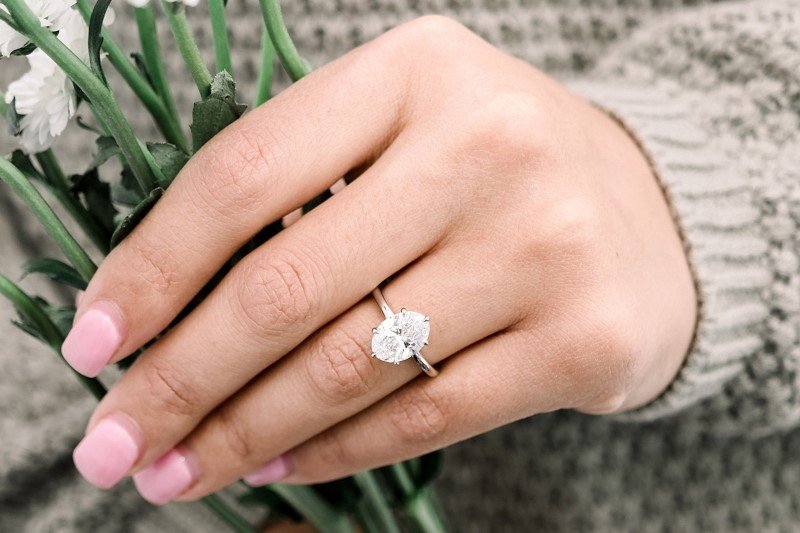
Oval-Cut Diamond: Some consider this shape to be the perfect, flattering blend of classic round and elongating marquises.
Pear-Cut Diamond: The pear-shaped diamond has the brilliance of a round engagement ring cut but with the added uniqueness of asymmetry.
Heart Cut Diamond: This cut is a sure-bet way to bring out its recipient's sentimental side.
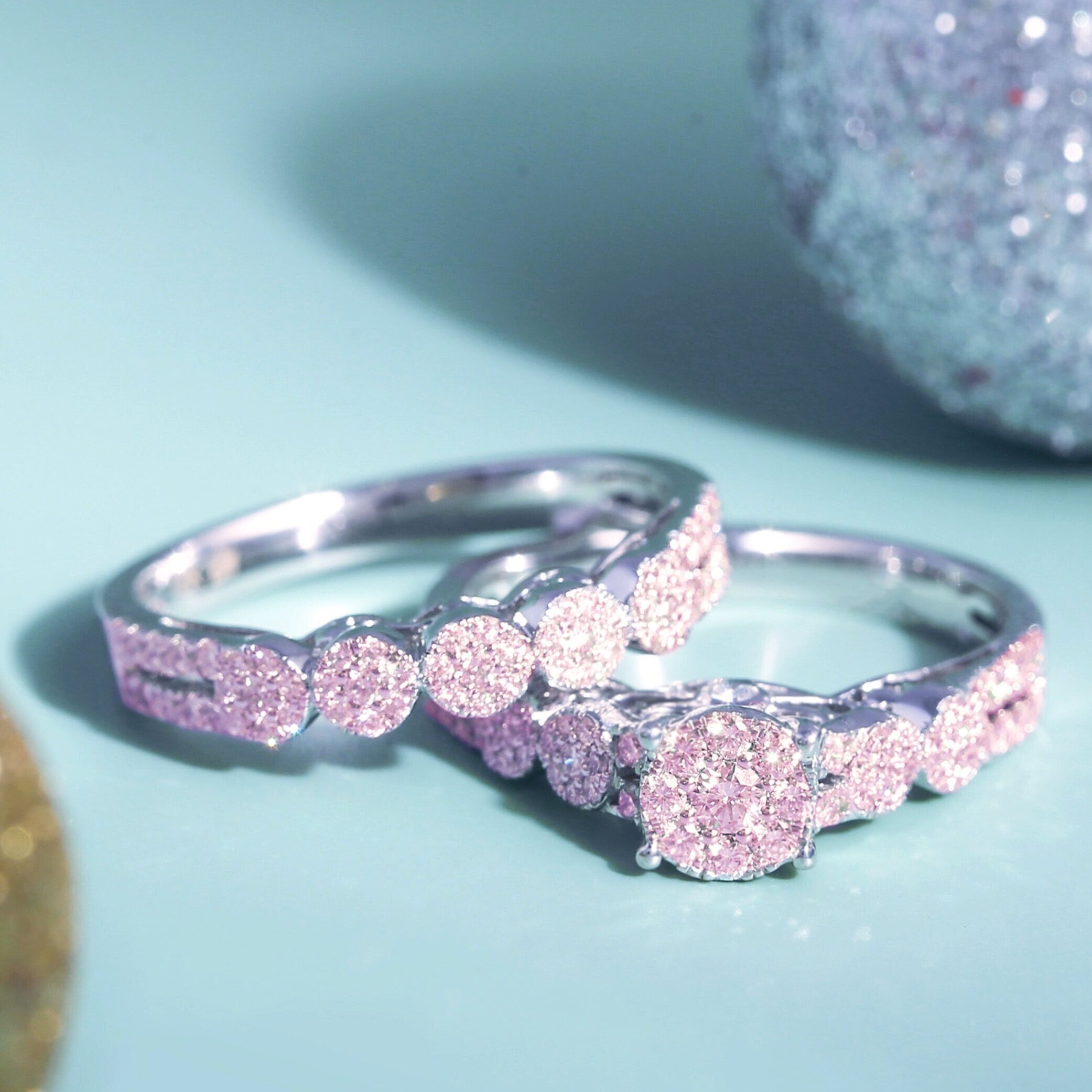
While the options are endless, there are certain types of engagement ring styles that continue to stand the test of time. Like the US brand, Sunny Eden™ provides customized bridal lab-grown diamonds with excellent Five C's. Sunny Eden diamonds are made from your or your beloved ones’ hair, which makes your diamonds unique, stylish and chic.