The Trace Elements and Carbon in Hair Has Been Revealed in Modern Technology
No matter how you look at hair, it’s a very personal thing. From shiny blondes to flame-like reds, we’ll try anything to make our hair stand out. It is because our hair grows in so many different shades, places, hair textures, and types that each person’s hair is naturally unique. But when it comes to the anatomy of hair, all of our strands are essentially the same. Even if you already know some facts about hair, this article makes a comprehensive and general explanation based on the lab-grown diamond made out of human hair. It gives you an idea of what your hair is made of and gives you more insight to understand your hair better and why it can be used for diamonds from hair.

What chemicals are in our hair?
Our hair accompanies us throughout our lives, from birth to death, grows with us, and goes through a growth cycle of birth, growth, and shedding. We can feel that our hair goes from soft to vigorous initially and finally becomes thin and delicate and falls out.
In modern discoveries, hair is composed of keratin and contains other elements and molecules that contribute to the appearance and behavior of hair. The main chemical elements present in the hair are composed of carbon (45%), oxygen (28%), nitrogen (15%), hydrogen (6.7%), and sulfur (5.3%).
The substances in the hair:
-
The main component of hair is protein, which accounts for about 65–95% of its weight. The most important protein is keratin, composed of amino acids about 91% (mainly cystine, cysteine, methionine, leucine, serine, glycine, arginine, and threonine).
-
The hair also contains between 12% and 15% water, present in different proportions related to the shaft’s health and the environment’s humidity level.
-
Pigments consist of melanin (colored substances) and are present in the hair in diffusions or particles.
Melanocytes use tyrosine (an amino acid for protein synthesis) as a precursor to synthesize the two main types of melanin: eumelanin, which is dark and found in black hair, and pheomelanin, which is lighter and found in blondes and red hair. The different hair colors are genetically determined and vary according to melanin’s type, amount, and distribution.
-
In addition, various trace elements are present, such as selenium, zinc, iron, magnesium, aluminum, calcium, copper, and trace amounts of minerals (cadmium, chromium, copper, zinc, iron, and silicon), which can be found by performing trace element analysis. These elements can be taken to the base of the hair follicle through the blood circulation and then help build the hair shaft. It is important to remember that the percentage of trace elements present in the hair is subjective and varies from person to person.
-
Hair also contains lipid components (3% of its composition). They are produced in the hair bulb by sterols, fatty acids, and ceramides. They are mainly found in the intercellular colloids of the cortex and cuticle, providing a certain impermeability to the hair and ensuring the cohesion of the hair fiber.
Do trace elements and carbon have a role in hair health?
Yes, they are. This is the definite answer that scientists can tell. And before we dive into the exploring, let's know their basic relations with hair health.
-
We saw from the information above that hair is made up of many contributing factors. Among them are proteins, primitive elements, amino acids, and ties that make up the hair fiber and support and protect the hair. The main contributor to the composition of hair is protein, as it makes up 91% of the hair fiber, such a considerable amount that it far exceeds each of the other components. On the other hand, amino acids are the building blocks of proteins and are composed of COHNS elements (carbon, oxygen, hydrogen, nitrogen, and sulfur).
-
Zinc deficiency — thinning hair and diffuse hair loss.
Copper deficiency — hair turns yellow and white.
Iron deficiency — thinning of hair.
Selenium deficiency — increased hair loss.
In addition, deficiencies of other trace elements such as calcium and iodine can also lead to dryness, hair loss, and hair quality deterioration.

These elements form bonds called side bonds that hold together long chains of amino acids known as polypeptide chains. Such chains are intertwined by creating a spiral motion, forming a helix.
Zinc, copper, iron, and selenium are the four trace elements that can most affect hair growth.
-
Zinc is a cofactor for many enzymes in the body, an essential component of antioxidant enzymes in the body that enhances the activity of blood cells. It is a vital trace element for hair growth and keratin synthesis.
The cross-section of the hair and the morphology of the hair follicles change both during and after zinc deficiency.
-
Copper promotes the formation of stable keratin structures from amino acids. In the case of copper deficiency, hair keratinization becomes abnormal, and pigmentation is gradually lost, which may even lead to gray hair.
-
Iron is the primary raw material for the synthesis of hemoglobin, and iron deficiency leads to a decrease in the oxygen-carrying capacity of red blood cells. As a result, hair follicles are susceptible to the oxygen-deficient environment, so hair appears dry, falls out, and may even have thinning hair on the top layer.
Changes in hair cross-section and hair micro cortex morphology in iron deficiency and after iron supplementation.
-
Selenium acts as an antioxidant through glutathione peroxidase to maintain average hair growth. Selenium deficiency can lead to hair loss, nail loss, and other skin symptoms.
The “carbon, oxygen, nitrogen, hydrogen and sulfur” in the chemical composition of hair are not in the form of monomers, molecules, or atoms, but in the form of elements, and the reference to “carbon, oxygen, nitrogen, hydrogen, and sulfur” emphasizes the presence of components rather than specific conditions.
What can human hair be used for?
In most societies, human hair is a material that is considered useless and therefore can be found in the municipal waste stream of almost every city and town in the world. Due to its slow degradation, it stays in landfills/waste streams for a long time and takes up a lot of space. Open piles of hair can produce hair dust that causes discomfort to people nearby and lead to respiratory problems if inhaled in large quantities. In addition, grease, sweat, and other organic matter stuck to the hair decays over time and becomes a source of foul odors and a breeding ground for pathogens.
The best way to solve such problems is to use waste as a resource. Human hair is a highly versatile material with excellent potential in several key areas such as agriculture, medical applications, construction materials, and pollution control. In addition to reducing waste, it contributes to economic development. As a potential material resource, human hair has the advantage that it is fully biodegradable, renewable, and available in every location.
Hair has great potential in several key areas, such as agriculture, medical applications, construction materials, and pollution control. In today’s sharing, we focus on how modern technology can turn hair into diamonds.

Why can hair be turned into lab-grown diamonds?
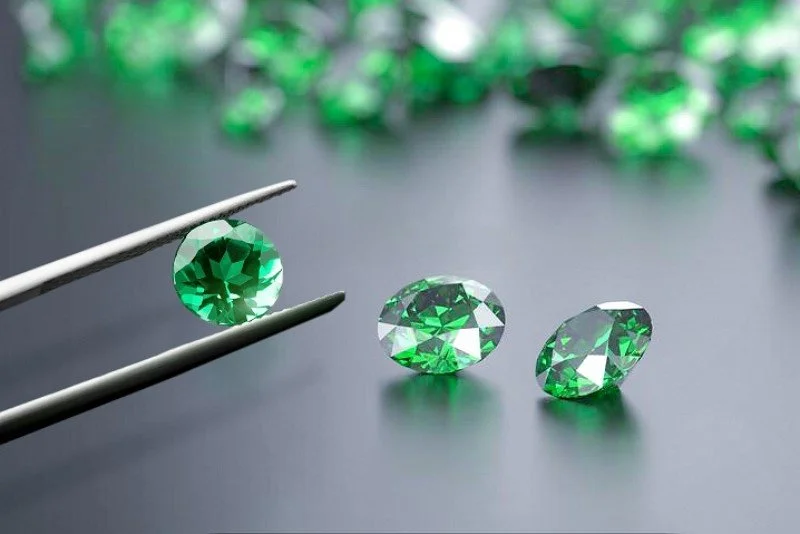
Diamond is the only gemstone composed of a single element. It is usually about 99.95 percent carbon. The other 0.05% may include one or more micro minerals, atoms not part of the diamond’s elemental chemical composition. As a result, some trace elements can affect its color or crystal shape.
Meanwhile, diamonds form the element carbon with a crystal structure of atoms arranged in a diamond cube. Diamonds have the highest hardness and thermal conductivity of any natural material, and these properties are utilized in major industrial applications, such as cutting and polishing tools. They are also responsible for the ability of the diamond anvil unit to enable the material to withstand the pressures of the earth’s depths.
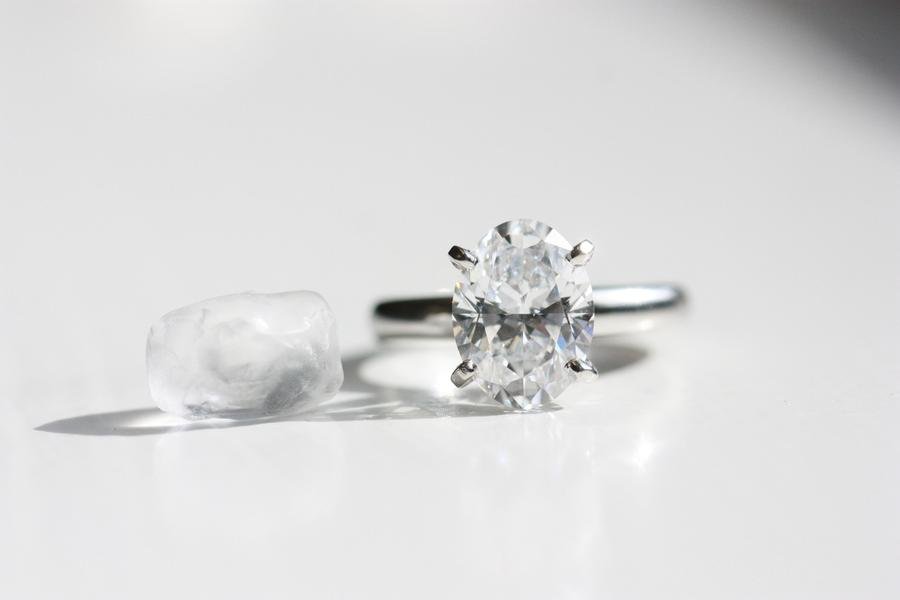
The steps from hair to lab-grown diamond:
First, collect a sample of hair. It doesn’t have much of your hair. You can create a diamond from as little as 0.5–2 grams of hair. It also doesn’t have to all come from the same person. You can provide a sample of your hair and your spouse’s hair to make a sparkling diamond together.
Second, the sample is analyzed. The hair sample is analyzed to determine its chemical composition and to assess how much carbon can be extracted from the hair.
Third, the carbon is extracted from the sample. Diamonds are made up of carbon atoms arranged in a tetrahedral structure called the “diamond cube.” Therefore, you need to extract carbon from the hair sample to use it to make diamonds.
Fourth, the carbon is cultivated and grown. The extracted carbon is used to create a mixture from which a crystalline matrix grows. This matrix is the basis for future diamonds.
Fifth, high pressure, high temperature (HPHT) production. The base material is put into a high-pressure, high-temperature machine where temperatures and pressures are similar to those deep in the earth’s crust (about 1,400°C, or 2,500°F.). The result is a diamond made in the same way as a natural diamond.
Finally, cutting, polishing, and setting the diamond. When ready to be placed in a ring, the rough diamond goes through the exact cutting and polishing process as a traditional diamond.
The best place to buy lab-created diamonds
Placing an order with Sunny Eden™ is a great idea.
Sunny Eden™’s specialty is diamond and gemstone fine jewelry, especially diamond engagement rings. Our commitment is to provide superior design, impeccable quality, exceptional value, and outstanding customer service. Headquartered in California, Sunny Eden™’s vision is to create a unique and beautiful experience for all customers while maintaining an image of sophisticated technology and continued growth.
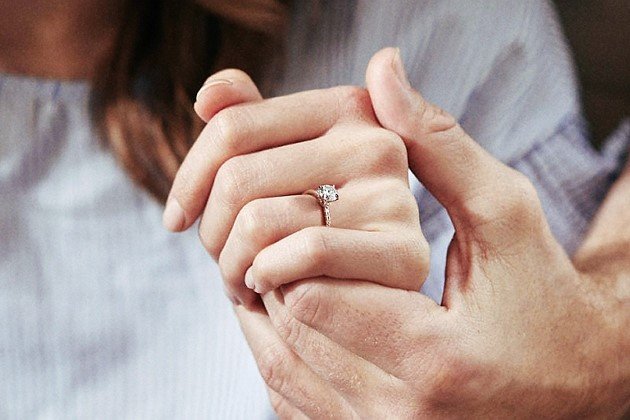
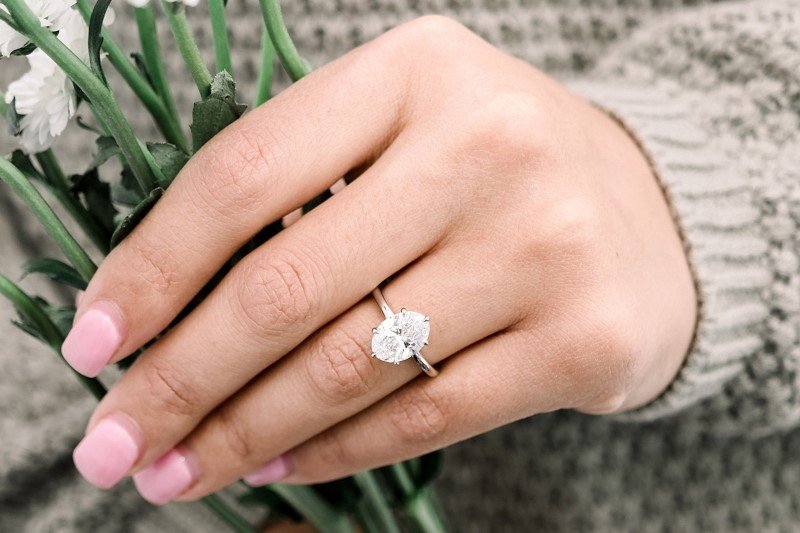
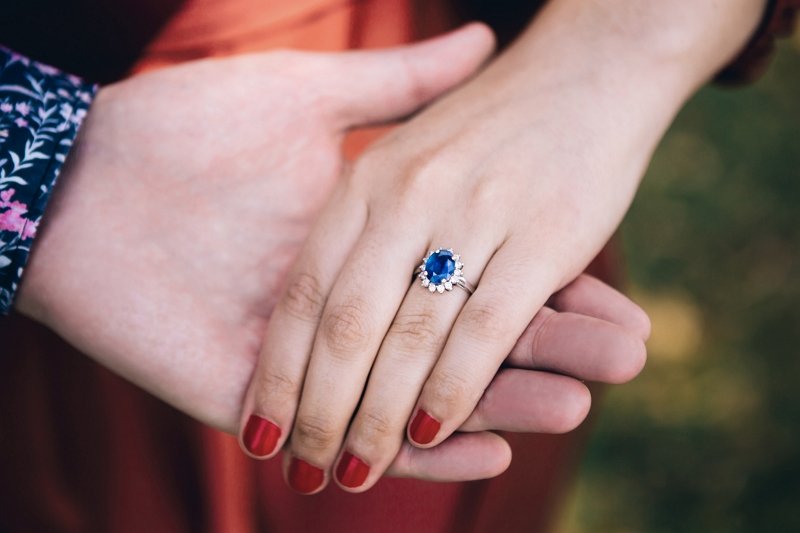
Sunny Eden™'s fabulous engagement rings and sparkly diamonds made from your hair are of the finest quality and value. You can customize your own diamond engagement ring here, create a unique ring that not only exhibits your passion and distinctive aesthetic sense, but also incorporate the deepest love to every detail of your custom design.
One of the most rewarding aspects of the business is providing gorgeous engagement rings or fine jewelry pieces. We love to see our customers hold their breath as we purify carbon up to 99.99% cut and polish the diamond. Achieving the “Wow!” of admiration and amazement is the ultimate goal.
FAQS about lab grown diamonds vs. natural diamonds
-
Lab-grown diamonds are just as natural as diamonds mined from the earth. Lab-created diamonds are identical in every way to diamonds mined from the earth, except that they are grown in a laboratory. They have the same chemical, physical and optical properties as mined diamonds and exhibit the same sparkle and brilliance. Lab-grown diamonds have a special significance when compared to rare earth mined diamonds of the same quality.
-
The difference between a natural diamond and a lab-grown diamond cannot be seen with the naked eye. Natural diamonds have a very small amount of nitrogen, while lab-grown diamonds have no nitrogen. This is actually one of the signs gemologists use to identify whether a diamond is lab-grown or natural.

Lab-grown diamonds are much affordable than earth-mined diamonds, making them an excellent choice for engagement rings and jewelry.